OKR is an acronym for objectives and key results. It is a goal-setting framework used by organizations to align and track progress toward their objectives. The framework was popularized by John Doerr, a venture capitalist who learned about it while working at Intel. It has since been adopted by many companies, including Google, LinkedIn, and Twitter.
In the OKR framework, an Objective is a specific, measurable, and time-bound goal that an organization wants to achieve. It should be ambitious and challenging, but also achievable. Key Results are the metrics used to measure progress toward the objective. They should be specific, measurable, and actionable. Key results are the specific milestones or checkpoints that help track progress toward the objective.
OKRs are usually set for a defined period of time, often a quarter or a year, and are reviewed regularly to track progress and adjust as needed. The idea is that by setting clear objectives and aligning everyone's efforts toward achieving them, organizations can improve focus, alignment, and results.
What Is an OKR for Software Developers?
OKRs have been widely adopted by software development teams over the past decade as a way to improve their focus, alignment, and results. In the fast-paced world of software development, it's easy for teams to get bogged down in the day-to-day tasks and lose sight of the bigger picture. By using the OKR framework, software engineering teams can define clear and measurable objectives that are aligned with the broader goals of the organization.
One of the main benefits of using OKRs in software development is that it allows teams to map their technical goals to business outcomes. This means that instead of focusing solely on technical tasks like fixing bugs or developing new features, teams can prioritize their work based on how it impacts the overall success of the organization. For example, a team might set a goal to reduce the time it takes to deploy new features to production, which would directly impact the company's ability to deliver value to customers.
Another benefit of using OKRs in software development is that it helps teams stay focused on the most important work. By setting specific, measurable, achievable, relevant, and time-bound objectives, teams can avoid getting sidetracked by low-priority tasks and ensure that they are working toward the most critical goals. This can be especially important in the ever-changing world of software development, where priorities can shift rapidly and it's easy to lose sight of what's most important.
This article focuses on the team’s goal as each team member's specific OKRs need to be unique based on his/her role, seniority, and starting point.
Setting OKRs for Developers
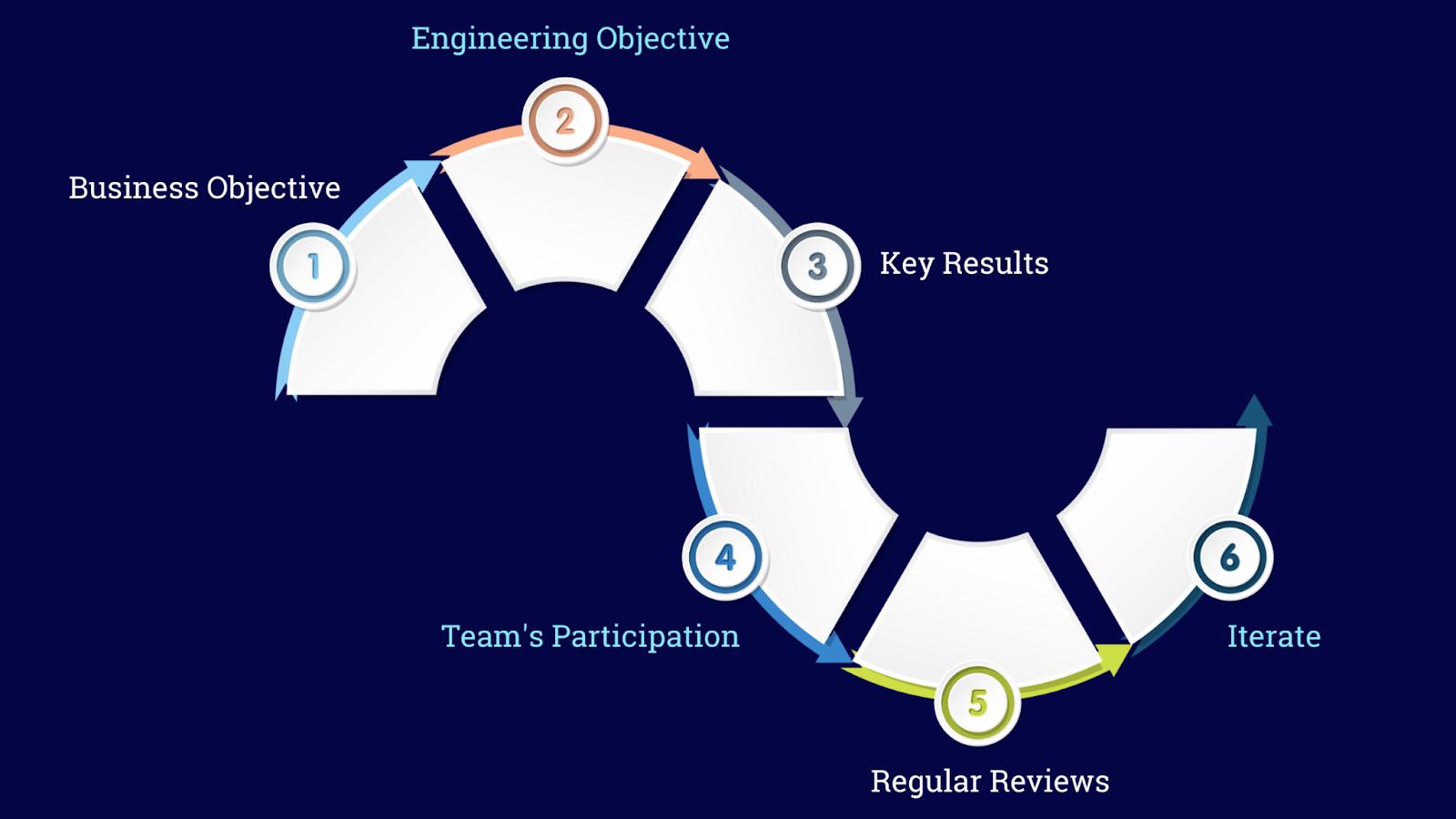
To set software engineers' OKRs, follow these steps:
- Identify business goals: First, identify the organization's broader business goals, and then align software engineering objectives to support these goals. For example, if the organization's goal is to increase revenue, a corresponding software engineering goal could be to improve the user experience of an e-commerce website, resulting in increased customer satisfaction and sales.
- Define engineering objectives: Software engineering teams should set specific, measurable, achievable, relevant, and time-bound objectives. Objectives could include things like improving software delivery, reducing bugs, or improving overall processes.
- Set key results: Identify specific metrics that align with the objectives. Key results should be specific, measurable, and actionable. Examples of key results for software engineers could include things like the number of bugs resolved, the amount of pull requests (PRs) reviewed, or the automation of certain manual tasks for the team.
- Involve the team: It is important to involve the entire software engineering team in the OKR process, as this will help ensure that everyone is working toward the same goals. This can include setting individual OKRs for each team member, as well as establishing team-wide objectives.
- Review regularly: OKRs should be reviewed regularly, such as on a weekly or monthly basis, to ensure progress and evaluate the timeframe to meet the goal.
- Continuously iterate: Finally, the OKR process should be continuously iterated upon, with objectives and key results being adjusted as needed based on feedback and results. This can help to ensure that the team is always working toward the most relevant and impactful goals.
By following these steps, software engineering teams can set meaningful and achievable OKRs that align with broader business goals, improve focus, alignment, and results, and lead to higher quality code, faster project completion times, and greater customer satisfaction.
3 Great Software Engineering OKR Examples
The OKR examples detailed below are specific, measurable, achievable, relevant, and time-bound. In addition, they are based on DevOps Research and Assessment (DORA) metrics. DORA metrics are widely recognized as key performance indicators for DevOps success, and these OKRs are designed to help software engineering teams improve their DevOps practices, resulting in faster time to market, higher quality code, and improved customer satisfaction.
Each OKR is focused on a specific DORA metric and sets a clear target for improvement. By setting these types of OKRs, software engineering teams can focus their efforts on achieving specific goals that align with broader business objectives, resulting in more efficient and effective DevOps practices and improved business outcomes. For each objective, this article provides you with four metrics to track your progress.
Objective: Shorten Time to Market for New Features by Half in One Year
Shortening the time to market of new features is important for businesses for several reasons:
- Competitive advantage: In today's fast-paced market, businesses need to be able to quickly release new features to stay competitive. Shortening the time to market allows businesses to respond to market changes and customer needs more quickly, which can give them an advantage over competitors.
- Customer satisfaction: Customers expect businesses to release new features and updates regularly. By shortening the time to market, businesses can meet customer demands more quickly, resulting in higher customer satisfaction and retention.
- Revenue generation: New features and updates can drive revenue growth for businesses. By shortening the time to market, businesses can start generating revenue from new features more quickly, which can help them achieve their revenue goals.
- Innovation: Shortening the time to market allows businesses to experiment with new ideas and innovations more quickly. This can help businesses stay ahead of the curve and identify new opportunities for growth.
Key Results
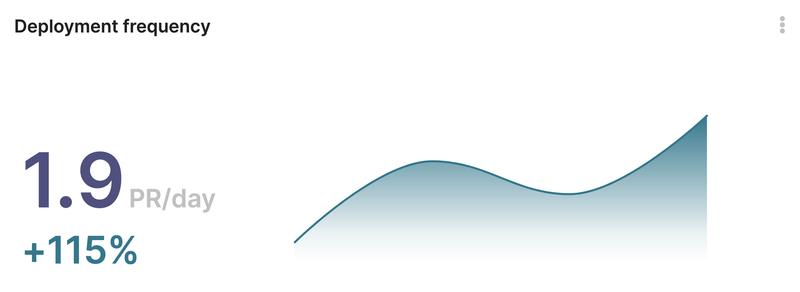
Increase the frequency of deployments from once a week to three times a week in three months by:
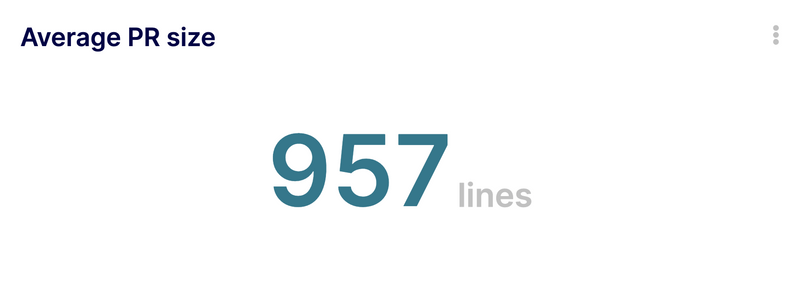
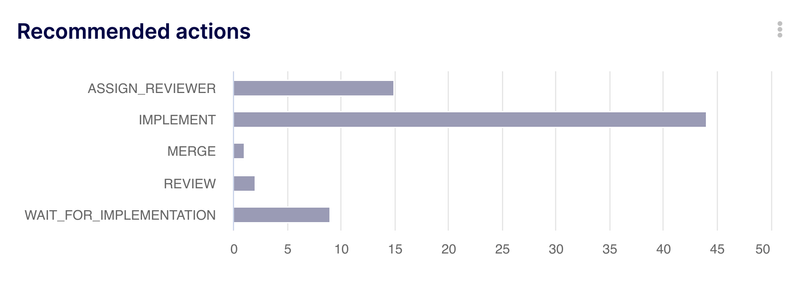
- Reducing the average size of pull requests to 600 lines max., leading to shorter development and review time.
- Recruiting/promoting two senior developers in the next three months, resulting in more resources to review pull requests faster.
- Selecting and implementing linters and code analytics tools, resulting in a shorter feedback loop and time saved for reviewers.
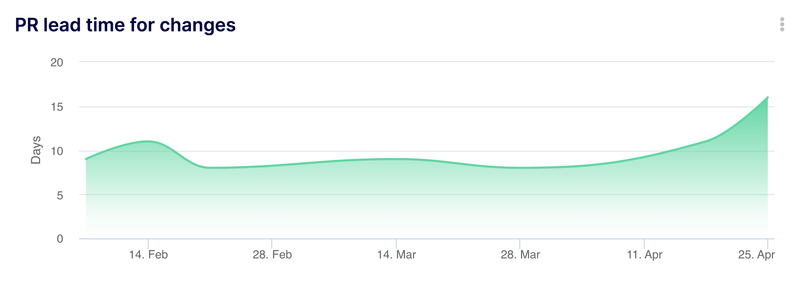
- Dividing Lead Time for Changes for pull requests by three with the reduction of average PR size, with the previously mentioned changes as well as a closer collaboration with product teams during scoping to avoid back and forth during the implementation.
How To Track the Shorten Time-to-Market OKR
Objective: Divide Mean Time To Restore (MTTR) by Half in One Year
Faster resolution of production issues is important for businesses for several reasons:
- Reduced downtime: Production issues can cause downtime for businesses, which can lead to lost revenue and decreased productivity. By resolving issues more quickly, businesses can minimize the impact of downtime and keep their systems up and running.
- Improved customer satisfaction: Production issues can also impact customer satisfaction, as customers may experience issues with the business's products or services. By resolving issues more quickly, businesses can improve customer satisfaction and retention.
- Cost savings: Resolving issues quickly can also result in cost savings for businesses. Production issues can be expensive to resolve, as they often require a significant amount of time and resources. By resolving issues more quickly, businesses can reduce the costs associated with issue resolution.
- Better decision-making: Faster issue resolution can also help businesses make better decisions. When issues are resolved quickly, businesses can analyze the root causes of the issues more effectively and identify opportunities for improvement.
Key Results
Speed up the incident resolution (MTTR) process by:
- Addressing lead time for changes on incident-labeled pull requests: Keep this metric under two hours. This lead time includes creating the fix, getting it reviewed and approved, and merging it.
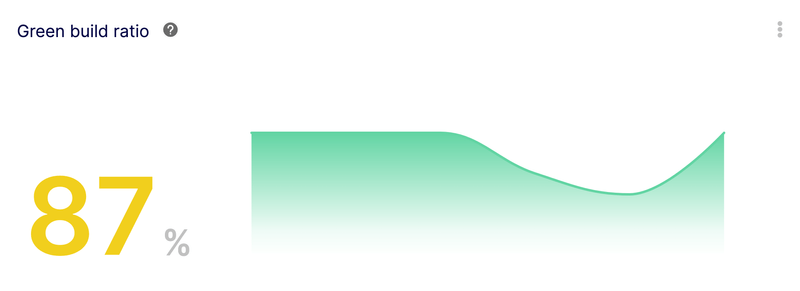
- Ensuring all incident-labeled PRs have a green build: Resolving incidents should not be at the cost of quality. If builds are skipped it probably means they're too long and your team does not want to wait for them. It is an indication that builds must be optimized to be faster.
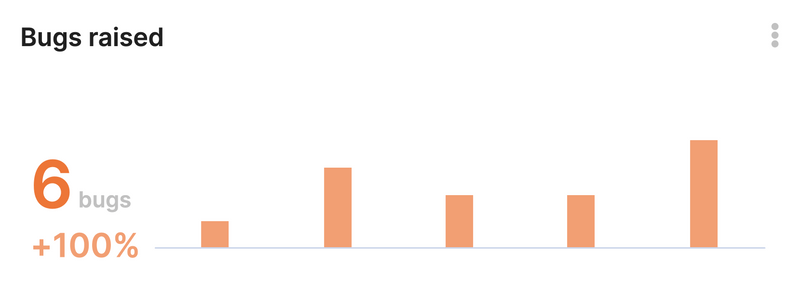
- Tracking and reducing the total number of bugs: Ensures that the team is used to resolving issues on a continuous basis, making it more efficient in performing investigations when production bugs occur.
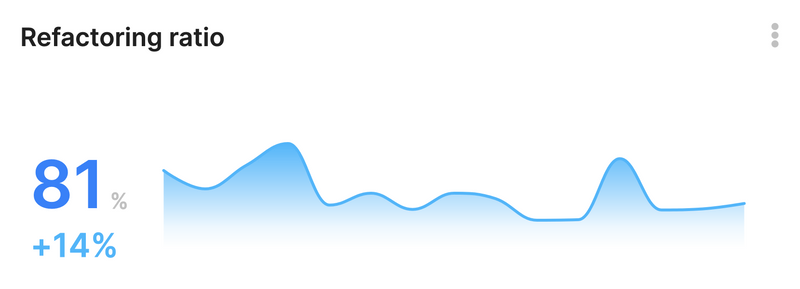
- Increasing code refactoring ratio by 20%, to speed up investigations and resolutions.
How To Track the Reduced MTTR OKR
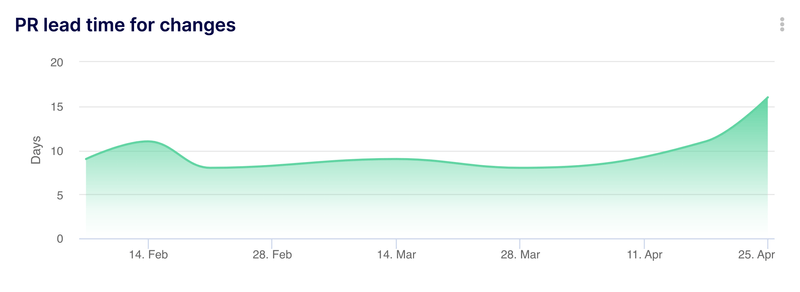
- Use this green build ratio template to track the total number of PRs merged without a green build among all merged PRs. Add a label filter on “Incident” to track this metric at an incident level.
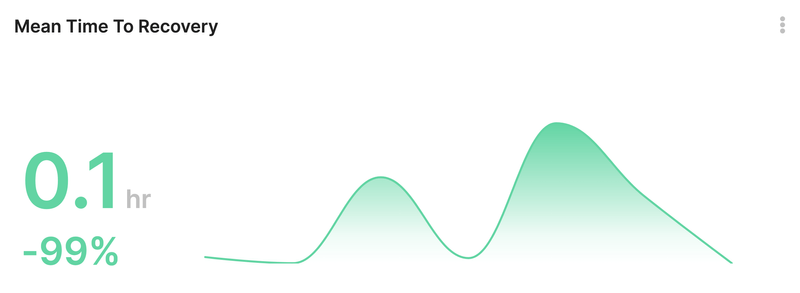
- Last, but not least, use this MTTR template to monitor how this metric is trending over time and if you are close (or not) to achieving your objective.
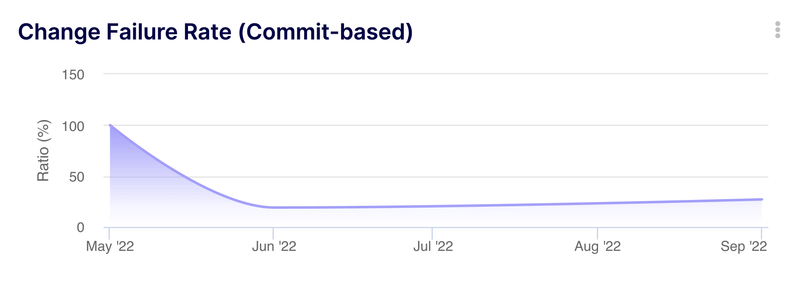
Objective: Reduce the Change Failure Rate (CFR) from 10% to 5%
Reducing the change failure rate is important for businesses for several reasons:
- Improved reliability: A high change failure rate can indicate that code changes are being released to production without proper testing or quality control measures in place. By reducing the change failure rate, businesses can improve the reliability of their systems and reduce the likelihood of production issues.
- Increased efficiency: When code changes fail, developers need to spend time fixing the issues and re-deploying the changes. This can be a time-consuming process that can impact the productivity of the development team. By reducing the change failure rate, businesses can improve the efficiency of their development processes and reduce the amount of time spent fixing issues.
- Cost savings: Failed changes can be expensive to resolve, as they often require a significant amount of time and resources to fix. By reducing the change failure rate, businesses can save costs associated with issue resolution and minimize the impact of failed changes on the bottom line.
- Improved customer satisfaction: Failed changes can impact the customer experience, as customers may experience issues with the business's products or services. By reducing the change failure rate, businesses can improve customer satisfaction and retention.
Key Results
Reduce the Change Failure Rate (CFR) from 10% to 5% by:
- Tracking the compliance status of all merged PRs and ensuring that at least 95% of merged PRs are compliant (green build and peer reviewed) and that the remaining 5% are properly documented.
- Monitoring and maintaining a healthy sprint depth, meaning your team is focusing on a reasonable total number of items (PRs and issues) in a given period of time.
- Performing regular backlog grooming, to ensure it’s not crowded with stale or irrelevant issues and that all issues can be handled by your team.
How To Track the Reduced CFR
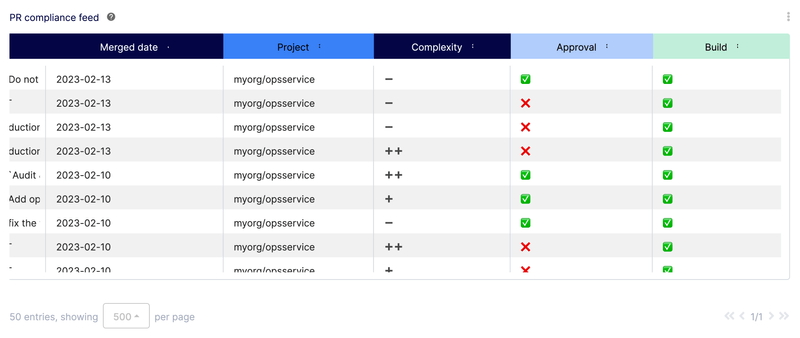
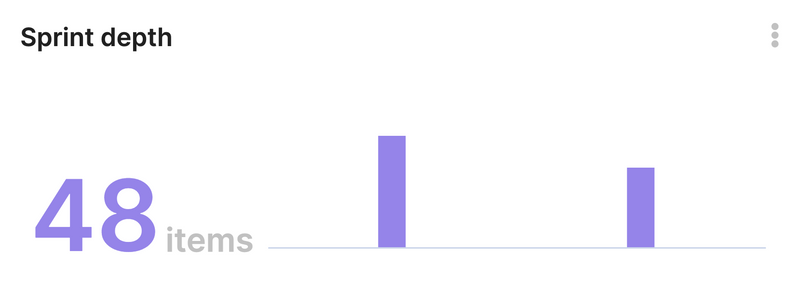

- Finally, use this CFR template to track how close you are to achieving your objective.
To effectively monitor and improve the performance of software development teams, the DORA Metrics Dashboard is a powerful tool that provides customizable metrics for actionable insights. When implementing this dashboard, it is important to start small and gradually scale up to avoid overwhelming team members with too many metrics. The dashboard includes the four key metrics mentioned earlier including: Change Failure Rate (CFR), Deployment Frequency (DF), Lead Time for Changes (LTC), and Mean Time to Recovery (MTTR). Each of these metrics contributes to evaluating different aspects of a team's performance, from identifying bottlenecks in development and review processes to maintaining customer satisfaction by reducing downtime.
To achieve elite performer status, it is essential to focus on people, processes, and technology. This includes limiting the scope of work and pull request size, adopting automation tools, collaborating with stakeholders, freeing up time for senior developers, and documenting all processes to facilitate problem resolution and efficient work execution. By comparing your engineering performance against the DORA metrics scale, you can set realistic goals for improvement and ensure that your team is consistently meeting industry standards.
Tracking your OKRs is crucial to your success, but it can be easy to fall behind and lose sight of your goals. Think of it like a ship without a compass, drifting aimlessly in the sea without direction. Without tracking your OKRs, you risk losing focus on your objectives and getting caught up in unimportant tasks.
Remember, your OKRs are not just a list of tasks to be completed. They are your roadmap to success. If you neglect to track them, you might as well be driving blindfolded. Don't let your hard work go to waste. Make sure to regularly monitor your progress and adjust your course as needed. With diligent tracking, you can confidently steer towards your goals and achieve success beyond your wildest dreams.
Start your OKR journey with DORA Metrics dashboard today!